
Where YOU get REAL Support and REAL Solutions
Defining Success Together
Autism and marriage aren't easy. We're here because we really get it.
REAL Neurodiverse Marriage
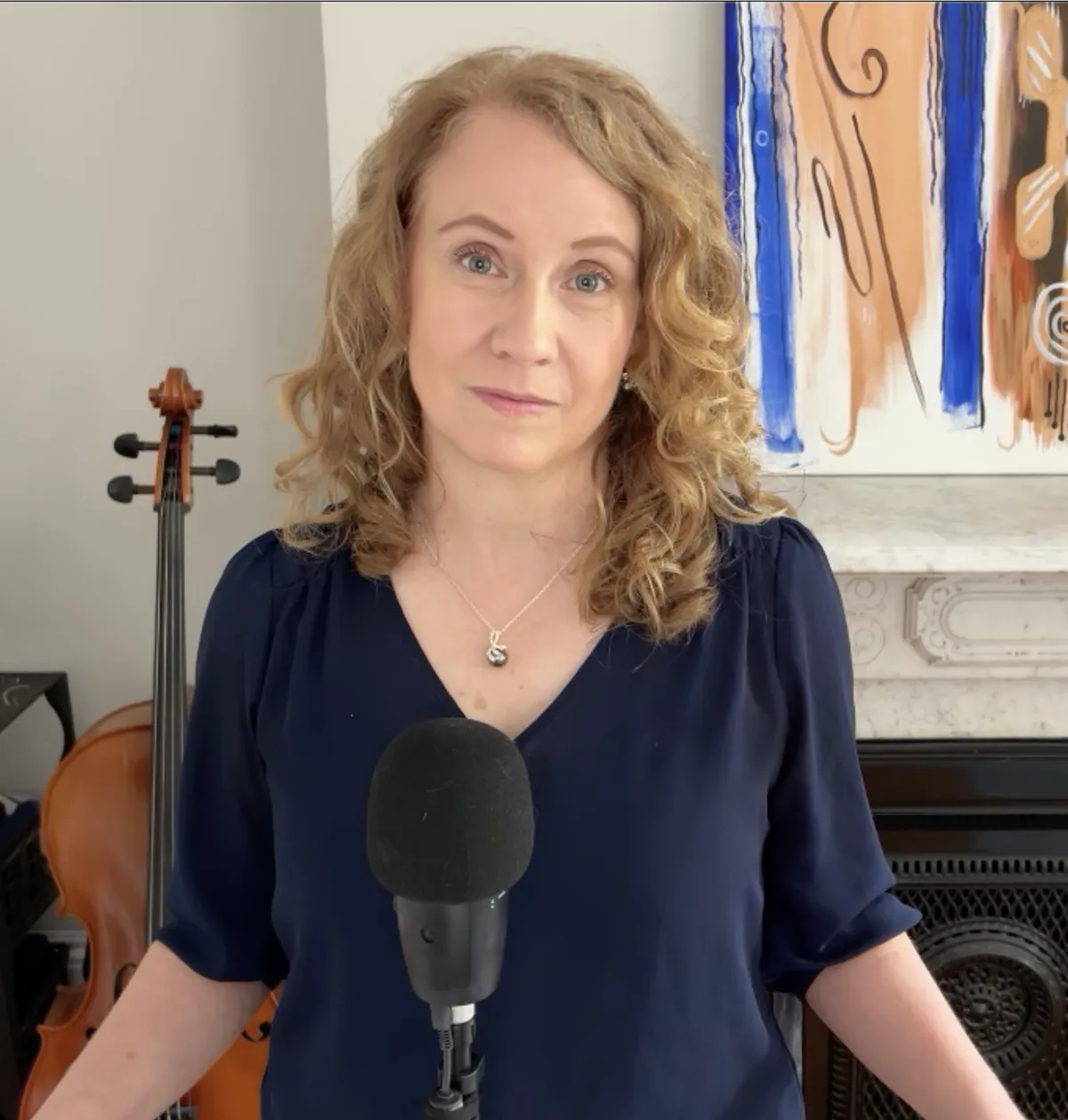
About Anne MacMillan
I built my original Neurodiverse Family Systems Theory on my education, personal life experience, and the professional experience I gained in the private neurodiverse services practice I founded in 2017.
Today, my services extend to support other professionals who have come to the new realization that neurodiversity is at the heart of many of the relationship challenges their adult clients face. Professionals can earn my Neurodiverse Family Systems Educator Credential (NFS-E) then use my practical 10-Step educational system, including quantitative assessments and support resources, to help their clients comprehend their relationship challenges and find the happiness and peace they deserve.
I have a research-based master's in psychology from Harvard University and studied developmental psychology as an undergrad. I received the Director's Thesis Award at Harvard for my original research on Level 1 autism and intimate life partnerships -- some of the first quantitative research on the subject in the world.
Altogether, I have over 50 years of personal life experience with neurodiverse family systems, over 20 years of personal life experience with neurodiverse intimate life partnerships, and 8 years of professional experience working with individuals managing the challenges of neurodiverse family systems.
I self-identify as a high body empathetic neurodivergent who just might also be a bit attention neurodivergent (ADHD). I am not autistic.

Anne MacMillan, MLA
Founder of the 10-Step Neurodiverse Family Systems Approach, Speaker, Researcher, Consultant, Coach, Educator and Expert Witness
Online Course Available Now
Married to Autism? Your Journey to Connection and Ease
An Online Course for Neurotypicals
and Non-Autistic Neurodivergents
Only $34.99 USD
Get the benefits of my education and life experience for less than the cost of one restaurant meal for two!
Neurodiverse relationships can be very confusing. Comprehending YOURSELF and the ways autism affects YOU can make all the difference. Take this first step towards
making life changes that will bring YOU the
Connection and Ease that YOU deserve.

Vicki R.

Found her insights spot on. I gifted this course to 2 others before I even finished it. Refreshing thoughts. Focus is on you, the NT of the relationship with great ways to look at things from both sides. Been married to Autism for 45 years and found this course something I will review on a regular basis to support myself.

Katie G.
This is a MUST for anyone who has a partner with autism. No matter where you are in your relationship, even if your relationship has ended, this is for YOU! Anne’s knowledge, compassion, guidance is unparalleled and unprecedented. Thank you Anne.
My Services
I offer consulting and coaching services to support you in achieving what you want from your life and for your partner, family and children. I work with either the autistic or the neurotypical partner.

Anne MacMillan, MLA
Founder of the R.E.A.L. 10-Step Neurodiverse Family Systems Approach, Speaker, Researcher, Educator, Consultant, Coach and Expert Witness
My Newest Blog Posts

Passiveness, Assertiveness, and Aggression in Neurodiverse Relationship Dynamics™
Passiveness, Assertiveness, and Aggression in Neurodiverse Relationship Dynamics™
In many neurodiverse relationships, conflict doesn’t move in a straight line. It drifts, compresses, disappears, and then reappears—often in ways that feel sudden, confusing, or disproportionate.
What’s often missed is that these shifts are not random. They follow a recognizable pattern shaped by how different nervous systems protect themselves under relational strain.
Within Neurodiverse Relationship Dynamics™ (NRD™), passiveness, assertiveness, and aggression are not personality traits. They are adaptive responses—ways a nervous system attempts to maintain safety, connection, or coherence when signals are repeatedly misread or unmet.
Passiveness as Protection
Passiveness in neurodiverse relationships is rarely indifference. More often, it begins as adaptation.
When a person learns—consciously or not—that their needs, perceptions, or timing consistently disrupt the relationship, they may begin to soften, delay, or withhold themselves. This can look like compliance, silence, over-agreement, or emotional flattening.
For some, passiveness is a form of care:
If I don’t push, things stay calmer.
If I don’t ask, I won’t overwhelm.
If I adjust, we can stay connected.
In neurodiverse systems, passiveness is frequently reinforced. Misattunement may decrease in the short term when one person yields. Conflict pauses. Tension drops. The system stabilizes—temporarily.
But the cost is often internal. Needs go unmet. Identity narrows. The person adapting may slowly lose access to their own preferences, boundaries, or emotional truth.
The Uneven Terrain of Assertiveness
Assertiveness is commonly framed as the solution to passiveness. But in neurodiverse relationships, assertiveness does not land evenly across nervous systems.
What feels clear, reasonable, or overdue to one person may feel abrupt, intense, or destabilizing to another. Differences in sensory processing, emotional pacing, and threat detection shape how assertive communication is received.
This creates a painful bind.
The person who has been passive may finally speak—only to be met with confusion, defensiveness, or overwhelm. The person on the receiving end may feel blindsided, criticized, or emotionally flooded, even when the content itself is fair.
When assertiveness repeatedly fails to repair or connect, it can feel unsafe to try again. Some people retreat back into passiveness. Others escalate—not because they want to dominate, but because nothing else has worked.
When Aggression Emerges
Aggression in neurodiverse relationships is often misunderstood as intent. Within NRD™, it is more accurately understood as overflow.
Aggression tends to emerge after long periods of restraint, accommodation, or unacknowledged labor. It may take the form of sharp language, emotional outbursts, rigid demands, or sudden withdrawal with force behind it.
Importantly, aggression here is not the absence of care. It is often the final signal of a system that has exceeded its capacity to adapt quietly.
These moments are frequently labeled as “out of nowhere.” In reality, they are the culmination of accumulated misattunement—what NRD™ describes as trauma spikes. The nervous system discharges what it can no longer hold.
This does not mean aggression is harmless or acceptable. Harm is still harm. But understanding why aggression appears is essential if the goal is clarity rather than collapse into blame.
The Cycle, Not the Character
One of the most damaging misinterpretations in neurodiverse relationships is treating these behaviors as fixed traits:
They’re just passive.
They’re too aggressive.
They refuse to be assertive.
NRD™ invites a different question:
What is the system teaching each nervous system to do in order to survive?
Passiveness, assertiveness, and aggression are not separate problems. They are points along a trajectory shaped by neurological mismatch, relational timing, and repeated signal failure.
Without intervention, systems tend to polarize. One person becomes quieter. The other becomes more reactive. Or roles reverse over time. The relationship organizes itself around protection rather than mutuality.
Why Naming This Matters
When these patterns remain unnamed, people often internalize shame. They believe they are failing at relationships, communication, or emotional regulation.
Naming the pattern does not fix it. But it changes the ground.
It allows individuals to recognize:
when passiveness is costing too much
when assertiveness is not being translated
when aggression is signaling a boundary long overdue
Within Neurodiverse Relationship Dynamics™, understanding this trajectory is not about choosing the “right” behavior. It is about recognizing how the system has been shaping behavior all along.
And for many, that recognition is the first moment of real relief.
My Research
Some of the world's first quantitative research on autism and marriage
I was working on a master's in psychology at Harvard University when I realized my husband of almost 20 years was autistic. I was shocked by how little was known about an issue that affected my own life so dramatically. So, I shifted my research interests to autism and marriage and was ultimately given the Director's Thesis Award for my work.
My White Papers and Pamphlets
© 2024 R.E.A.L. Neurodiverse
All Rights Reserved
anne@REALneurodiverse.com
Text or Call: (617) 996-7239 (United States)